
By Caspar Laven
---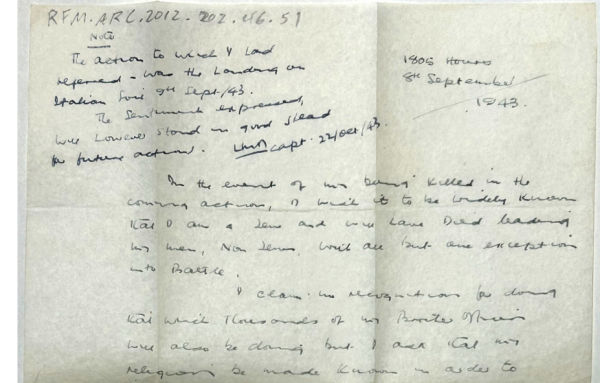 Among the papers of Leslie Maurice Dale at the Fusilier Museum London is a remarkable letter. It was written on 8 September 1943, the evening before Dale would land at Salerno in Italy as part of the Allied invasion force during World War II. The letter was intended to be read in the event of his death. In it, Dale describes his pride in his service for the British war effort and the privilege of commanding other brave men.
He also reflects on his identity as a British Jew serving alongside predominantly gentile soldiers for the principles of “Freedom, Tolerance, and Fair Play”, observing in this moment of intense vulnerability that even if he were to fall the next day on the beaches of Salerno his efforts would not have been in vain. This letter offers a deeply personal insight into the motivations of a young man whose wartime service would take him from London to the battlefields of Italy. During that service he would be promoted to the rank of Major and earn both the Military Cross and Distinguished Service Order.
Leslie Maurice Dale was born Maurice Cohen into a Jewish family in Woolwich, southeast London. He was one of nine children whose parents ran a tailoring business. In 1938, amid the backdrop of a frightening rise in antisemitism in Britain, the family changed their surname from Cohen to Dale. This anglicised name would have ensured the family faced less discrimination, and potentially eased Dale’s path as an officer in the British Army. Despite this measure, Dale’s Jewishness remained an ever-central element of his life. Before the war, he had founded the Woolwich branch of the Jewish Lads’ Brigade and he remained in contact with its administrators subsequently to offer advice.
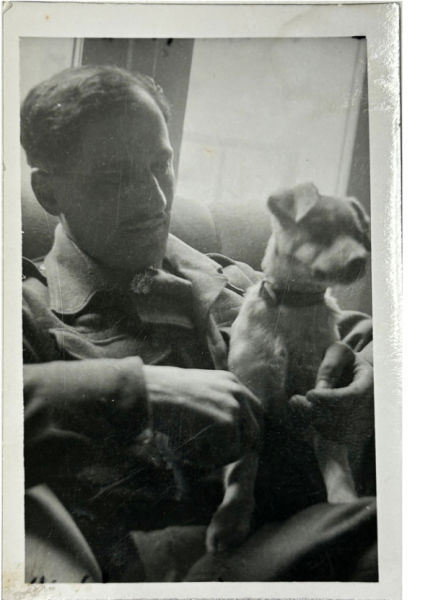 Dale enlisted on 13 June 1940 at the age of 25, having formerly been a manager at a printworks. He went to Sandhurst in November of that year, receiving his commission the following March. His early service took him to North Africa before he sailed from Tripoli towards the Italian campaign. It was in Italy that he first saw significant fighting. At Salerno he distinguished himself while defending a bridge against superior German forces. Despite having fewer men under his command, he held the position, preventing the enemy from crossing during a key moment in the battle, and even managing to personally shoot a tank commander. For his efforts at Salerno, he was awarded the Military Cross and was soon promoted to the rank of Major.
Dale later fought at Anzio, where his bravery earned him the Distinguished Service Order. A newspaper cutting from the time celebrates the award as his “second honour for gallantry” and recalled the determination he had demonstrated at Salerno too. At both battles he was wounded.
This impressive military record only tells part of Dale’s story. Major Dale continued to engage with Jewish life while serving. He corresponded with Jewish Chaplains in the British Army, attended Channukah services, and maintained links with the Jewish Lads’ Brigade. After the war he would join the Association of Jewish Ex-Servicemen.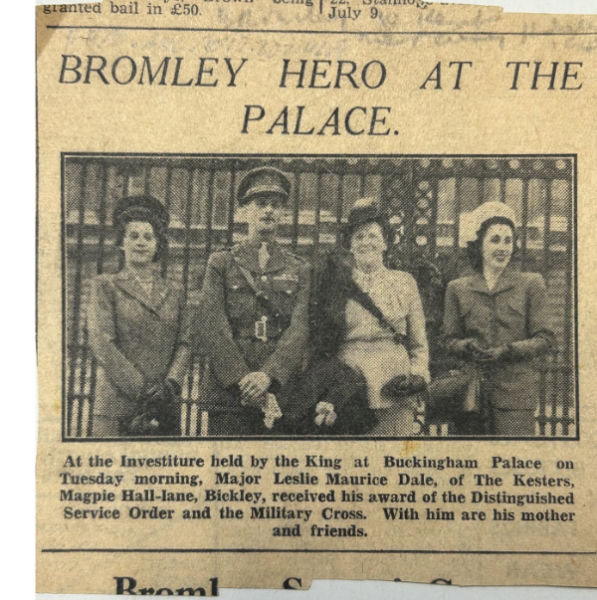 The most striking expression of his identity survives in the letter he wrote in case he did not return from Salerno. “In the event of my being killed in the coming action I wish it to be widely known that I am a Jew and will have died leading Non Jews… I ask that my religion be made known in order to illustrate that Jew does fight and die together with Non Jew,” he wrote.
He also requested that should the loyalty of British Jews ever be questioned, his letter should be produced as evidence of their patriotism and willingness to sacrifice themselves for the sake of their country and the principles that Britain aimed to uphold. The year Dale wrote his letter saw a rising tide of wartime antisemitism in Britain, including offensive slogans graffitied on buildings in London and Jewish people accused of cowardice and profiteering.
The collection at the Fusilier Museum London preserves more than the official career of a decorated officer. Through Dale’s letters, drawings, photographs, and news clippings, it reveals how he understood his own service as a soldier, a British citizen, and a Jew. His invoking of “Freedom, Tolerance, and Fair Play” as ideals worth defending remains as a powerful statement even today.
Caspar Laven researched and catalogued aspects of the Museum’s World War II collection during a work placement in August 2026. This work formed part of the Museum's World War II Archives Digitisation Project.
*The top image is believed to be a self-portrait by Major L.M. Dale.
Archived posts
Browse our old blog posts